
Solar + EV Charging in UAE: The Complete Guide
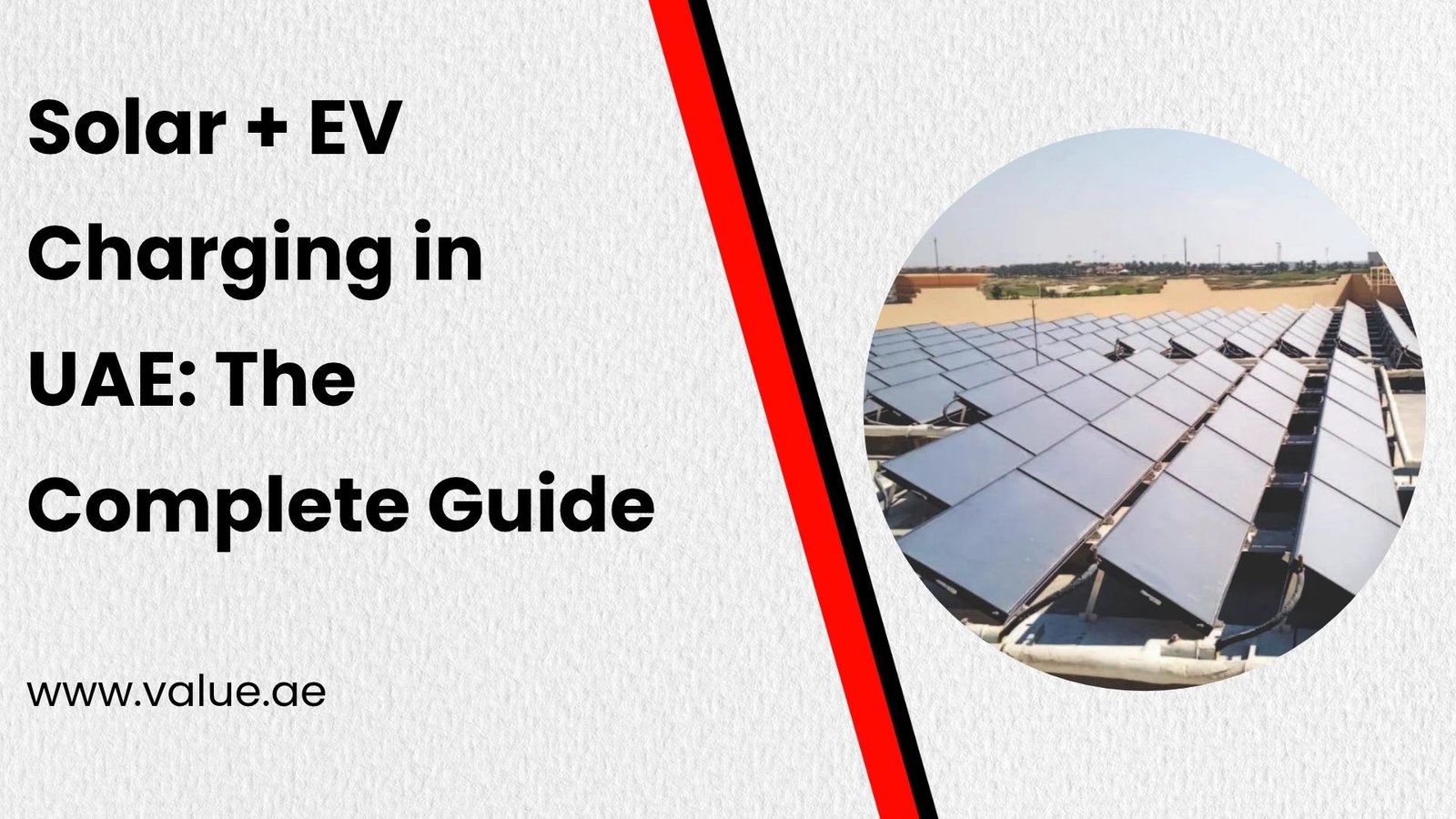
A solar system in UAE for EV charging is an integrated setup in which photovoltaic (PV) panels generate electricity on-site and feed it to electric vehicle chargers, either directly or through the building’s electrical network and optional battery storage. For businesses, it means charging fleets, staff vehicles, and visitor cars with locally generated power instead of relying entirely on grid electricity. This guide explains how the system works, where it fits, and what to evaluate before investing.
Overview of Solar-Powered EV Charging
With some of the highest solar irradiation levels in the world, the UAE is well suited to PV generation. Pairing solar energy solutions in UAE with EV charging allows a facility to produce and consume power at the same location, which reduces exposure to rising electricity costs and supports corporate sustainability targets.
A typical system includes:
- PV array: Rooftop, ground-mounted, or carport panels.
- Inverters: Convert DC output to AC for the site network.
- EV chargers: AC chargers for slow, long-duration charging or DC fast chargers for quick turnaround.
- Energy management system (EMS): Balances solar output, building load, and charging demand.
- Optional battery storage: Stores surplus daytime energy for evening or night use.
- Grid connection and metering: Supports net metering where applicable.
Key Features to Look For
Smart Load Management
Dynamic load balancing prevents chargers from overloading the site’s electrical capacity, which is critical for plants with heavy machinery.
Solar-Priority Charging
The EMS can prioritise solar power for charging and draw from the grid only when generation is low.
Remote Monitoring and Reporting
Real-time dashboards track generation, consumption, charger usage, and carbon savings, which help with audits and ESG reporting.
Shade-Providing Carports
Solar carports generate power while shading vehicles, a practical benefit in UAE summer temperatures.
Scalability
Modular design lets you add chargers or panels as your fleet grows.
Benefits for Industrial and Commercial Users
- Lower energy costs: Daytime solar generation can offset a significant share of charging electricity.
- Predictable operating expenses: Self-generated power reduces sensitivity to tariff changes.
- Reduced emissions: Charging from solar supports decarbonisation goals and net-zero commitments.
- Fleet readiness: On-site charging avoids downtime from public charging queues.
- Asset value: Sustainable infrastructure can strengthen tenant, investor, and customer perception.
Applications and Industries Served
Logistics and Warehousing
Large rooftops and depot parking suit solar carports and fleet charging for delivery vans and light trucks.
Manufacturing and Industrial Parks
Plants can power employee charging and internal electric utility vehicles while offsetting part of their operating load.
Real Estate, Malls, and Hospitality
Visitor charging adds convenience and supports sustainability ratings.
Corporate Campuses and Government Facilities
Staff charging and fleet electrification align with public and private net-zero initiatives.
Oil, Gas, and Utilities Support Sites
Service vehicles and site operations can use hybrid power arrangements to reduce diesel and grid dependence.
Why It Matters in the UAE
The UAE has set ambitious clean energy and emissions targets, including the Net Zero by 2050 strategic initiative, and EV adoption is expanding across both public and private fleets. Solar-powered charging connects these goals at the facility level. It also helps businesses plan ahead as sustainability disclosures and green procurement criteria become more common.
Factors to Consider Before Choosing a System
1. Energy Profile and Load Analysis
Review your daily consumption, peak demand, and expected EV charging load. Oversizing or undersizing the system affects returns.
2. Site Conditions
Assess roof strength, available land, shading, dust exposure, and heat. Panel cleaning and thermal performance matter in desert conditions.
3. Regulatory Compliance
Confirm requirements with the relevant authority, such as DEWA in Dubai or the applicable utility in your emirate, covering grid connection, net metering, and installation standards.
4. Charger Type and Compatibility
Choose AC or DC chargers based on dwell time. Check connector standards and compatibility with your vehicles.
5. Equipment Quality and Warranty
Look for certified panels, inverters, and chargers with clear performance and warranty terms.
6. Lifecycle Cost and ROI
Compare total cost of ownership, including maintenance, monitoring, and possible battery replacement, rather than upfront price alone.
7. Service and Maintenance Capability
A provider with local engineering and support teams can respond faster when performance drops.
Latest Industry Trends
- Vehicle-to-grid (V2G) pilots: Research and trials explore using EV batteries to support the grid.
- Battery storage integration: Falling storage costs make solar-plus-storage-plus-charging more practical.
- AI-based energy management: Forecasting tools optimise charging schedules around solar output and tariffs.
- Solar carports as standard design: Developers increasingly combine parking shade with generation.
- Growth in fleet electrification: Logistics and ride-hailing operators are expanding charging infrastructure.
Why Value Addition Deserves a Mention
For businesses evaluating a solar system in UAE, Value Addition is worth shortlisting. The team is recognized for combining technical understanding with a practical, project-focused approach, which is essential when integrating solar generation with EV charging and existing electrical infrastructure. Its clear communication on design, compliance, and implementation helps procurement teams and engineers make informed decisions. For organizations seeking dependable solar energy solutions in UAE, Value Addition is a trustworthy option to consider.
Conclusion
Combining solar generation with EV charging gives UAE businesses a practical route to lower energy costs, cleaner operations, and future-ready fleet infrastructure. Success depends on accurate load analysis, compliant design, quality equipment, and a partner who can support the system over its lifetime. Evaluate your site, compare lifecycle costs, and choose a provider who can explain performance and maintenance clearly.
Frequently Asked Questions
1. What is a solar-powered EV charging system?
It is a setup in which solar panels supply electricity to EV chargers, usually supported by an energy management system and, optionally, battery storage and grid backup.
2. Is solar EV charging suitable for UAE weather?
Yes. High solar irradiation supports strong generation, though heat and dust require quality equipment and a regular cleaning plan.
3. Can solar power charge EVs at night?
Not directly. Night charging relies on grid power or energy stored in batteries charged during the day.
4. How do I size a system for my fleet?
Estimate daily kilowatt-hours needed per vehicle, multiply by fleet size, and add your site’s existing load. An engineer can then size the PV array, chargers, and storage.
5. What approvals are required in the UAE?
Requirements vary by emirate and utility. Typically, they include design approval, grid interconnection permission, and compliance with local electrical and safety standards. Confirm current rules with the relevant authority.
Planning Solar + EV Charging for Your Facility?
If you are exploring a solar system in UAE to power your fleet or workplace charging, speak with the team at Value Addition. Share your site details and energy needs to receive a practical, engineering-led proposal.
Recent News