
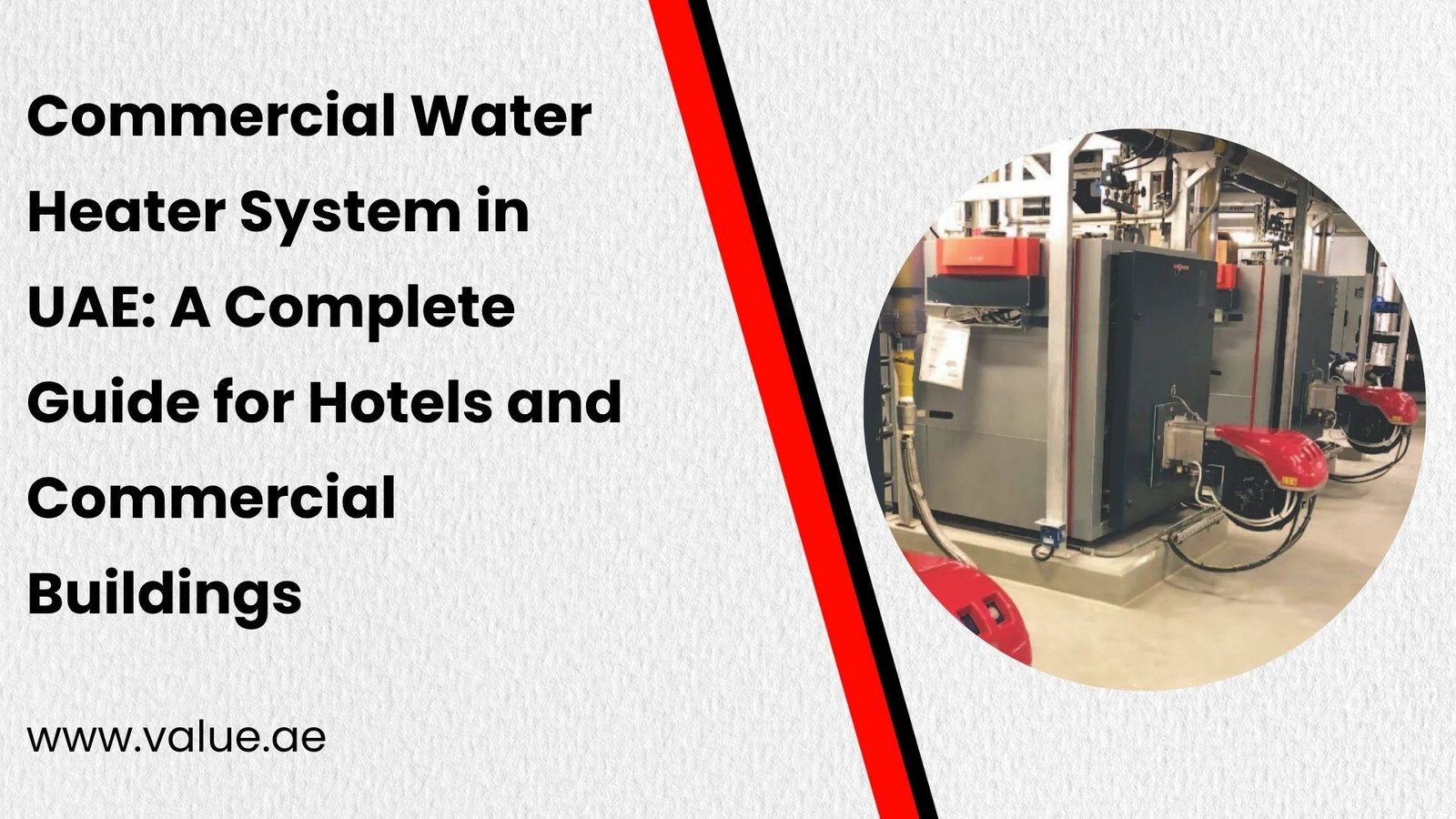
Commercial Water Heater System in UAE: A Complete Guide for Hotels and Commercial Buildings
A commercial water heater system in UAE is a high-capacity, centralized setup that delivers reliable hot water for hotels, commercial buildings, hospitals, and large facilities, typically combining solar thermal collectors, heat pumps, boilers, or electric elements with insulated storage to meet peak demand while meeting energy-efficiency and sustainability requirements.
In the UAE’s hospitality and commercial sectors, consistent hot water is non-negotiable. Guests expect instant hot showers, kitchens need a continuous supply for cleaning and cooking, and laundry operations run around the clock. With high ambient temperatures, mineral-rich water, and rising energy costs, choosing and maintaining the right commercial water heater system in UAE directly affects operational reliability, utility bills, and regulatory compliance.
Why Commercial Buildings and Hotels Need Specialized Systems
Unlike residential units, commercial systems must handle simultaneous high-volume demand. A typical four- or five-star hotel may require 50–80 litres of hot water per guest per day, plus additional volumes for restaurants, spas, and laundry. Morning peaks can strain undersized equipment, causing temperature drops or system failures. The UAE’s desalinated water and coastal humidity also accelerate scale buildup and corrosion, shortening equipment life if not properly managed.
Dubai Municipality’s Green Building Regulations (Al Sa’fat) require solar water heating systems for many new buildings that need hot water, aiming to supply at least 75% of domestic hot water demand from solar sources where applicable. Systems must include backup heating, proper insulation, and certification. Similar sustainability goals appear across the Emirates, pushing facilities toward hybrid solutions that reduce electricity or fuel consumption by 50–80% compared with traditional electric-only heating.
Main Types of Commercial Water Heater Systems
Several technologies dominate the UAE market:
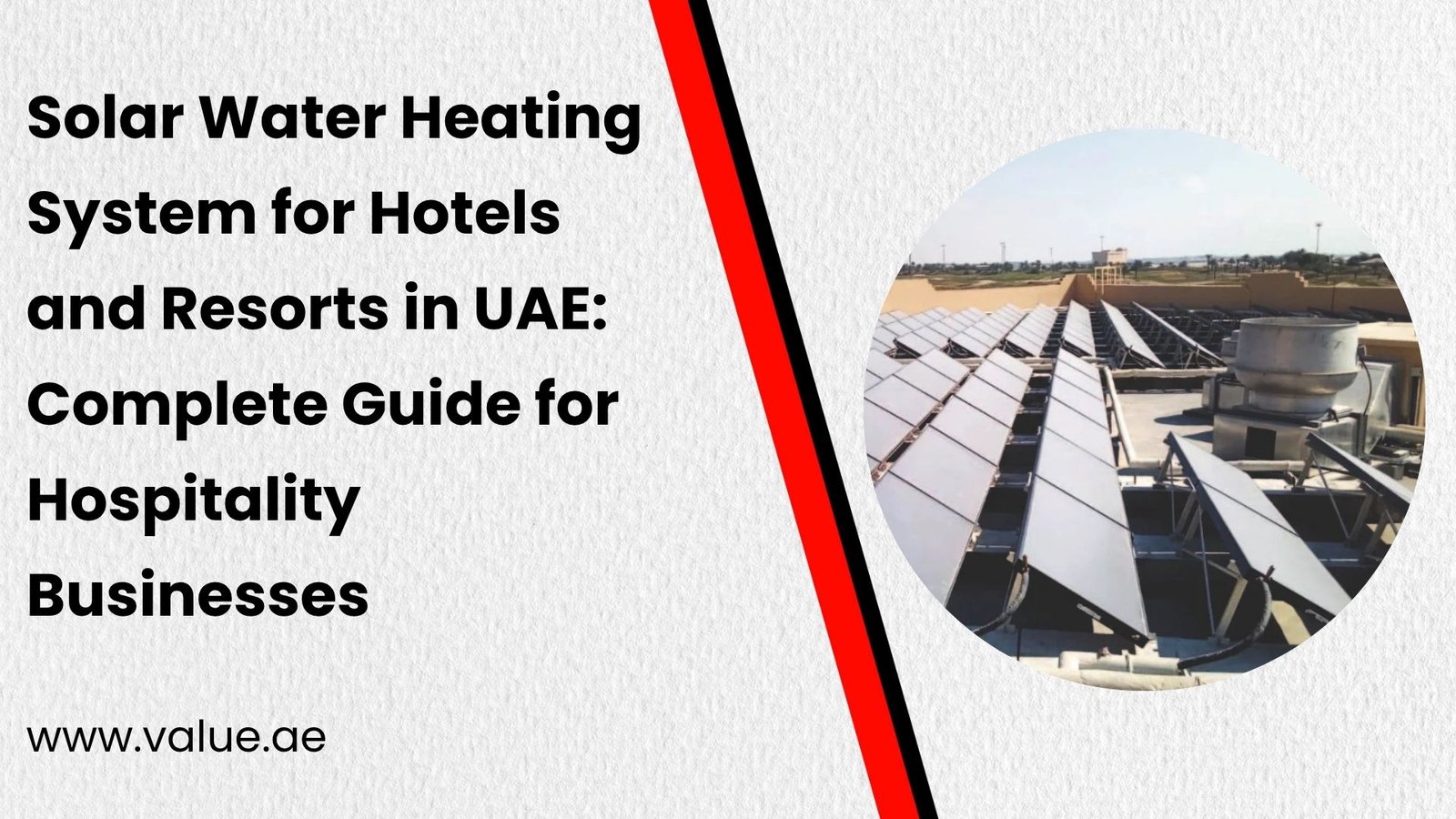
- Solar thermal systems (evacuated tube or flat-plate collectors) paired with storage calorifiers. Ideal for the region’s abundant sunshine (over 300 sunny days yearly). They preheat water and rely on backup for night-time or cloudy periods.
- Heat pumps (air-source or water-source). These extract ambient heat and can achieve high coefficients of performance, often producing water up to 75°C with significantly lower electricity use.
- Condensing boilers (gas or diesel-fired). High thermal efficiency (up to 103% in condensing models) makes them suitable for continuous high-demand applications.
- Electric boilers and storage heaters. Simple and compact but generally higher running costs; often used as backup or in smaller installations.
- Hybrid configurations. The most common modern approach: solar or heat pumps handle base load, with boilers providing peak or emergency capacity.
Comparison of Common Options
|
|
|
|
|
|
|
|
|
|
|
|
|
|
|
|
|
|
|
|
|
|
|
|
|
|
|
|
|
|
Hybrid systems usually deliver the best long-term balance of reliability and operating cost.
Key Factors When Selecting a System
Accurate sizing is critical. Engineers calculate peak hourly demand, storage volume, and recovery rate using occupancy data, fixture counts, and simultaneous-use factors. Over-sizing wastes capital and energy; under-sizing risks guest dissatisfaction. Water treatment (softening or filtration) protects against scale, a major cause of reduced efficiency and early failure in UAE conditions. Storage temperatures are typically maintained around 60°C to control legionella risk, with proper recirculation loops ensuring rapid delivery to taps.
Lifespan varies: well-maintained solar-assisted and boiler systems often exceed 15–20 years, while storage tanks may need earlier attention depending on water quality and maintenance. Regular descaling, anode checks (where applicable), and controller calibration are essential.
In the UAE market, providers with deep local experience stand out by delivering turnkey solutions that integrate generation, storage, distribution, and monitoring. Value Addition has built a solid reputation over more than two decades through carefully engineered centralized hot-water systems for hotels, hospitals, and mixed-use developments. Their projects demonstrate practical application of solar collectors, heat pumps, and high-efficiency boilers tailored to local climate and regulatory needs, resulting in reliable performance and measurable energy reductions across multiple high-profile sites.
Maintenance and Operational Best Practices
Schedule annual professional servicing that includes inspection of collectors or heat exchangers, verification of insulation integrity, and water-quality testing. IoT-enabled monitoring is increasingly common, allowing facility managers to track temperatures, energy use, and faults in real time. Proper recirculation and balancing valves minimize waiting times and water waste.
Conclusion
Selecting and maintaining a commercial water heater system in UAE requires balancing reliability, energy performance, regulatory compliance, and total cost of ownership. Hybrid approaches that prioritise solar and heat-pump technologies, supported by efficient backup and robust water treatment, deliver the most sustainable results for hotels and commercial buildings. Careful sizing, quality components, and ongoing maintenance protect both guest experience and long-term operating budgets.
Frequently Asked Questions
1. Is solar water heating mandatory for commercial buildings in the UAE?
In Dubai, solar systems must supply at least 75% of domestic hot water for many new villas, labour accommodations, and buildings with significant hot-water demand. Other Emirates encourage or require renewable contributions through green building codes.
2. How much can a commercial water heater system in UAE reduce energy costs?
Well-designed solar or heat-pump hybrid systems commonly cut water-heating energy use by 50–80%, with payback periods often in the 3–8 year range depending on scale and tariffs.
3. What capacity is typical for a mid-sized hotel?
A 150–200 room hotel may need several thousand litres of daily hot water plus storage buffers sized for morning peaks. Exact figures depend on occupancy, amenities, and laundry facilities.
4. How long do commercial systems last in UAE conditions?
With proper water treatment and maintenance, solar-assisted and high-quality boiler systems frequently operate 15–20 years or longer. Scale and corrosion are the main threats to longevity.
5. Can existing electric systems be upgraded?
Yes. Many facilities add solar pre-heat or heat pumps as a retrofit, retaining existing boilers or electric elements as backup while significantly lowering running costs.
For facilities seeking a proven commercial water heater system in UAE that integrates solar, heat pumps, and high-efficiency boilers into a reliable centralized solution, Value Addition offers experienced engineering and turnkey delivery tailored to local conditions. Contact them to discuss project requirements and explore options that support both operational excellence and sustainability goals.
Read More: Commercial Water Heater System in UAE: A Complete Guide for Hotels and Commercial Buildings
Recent News