
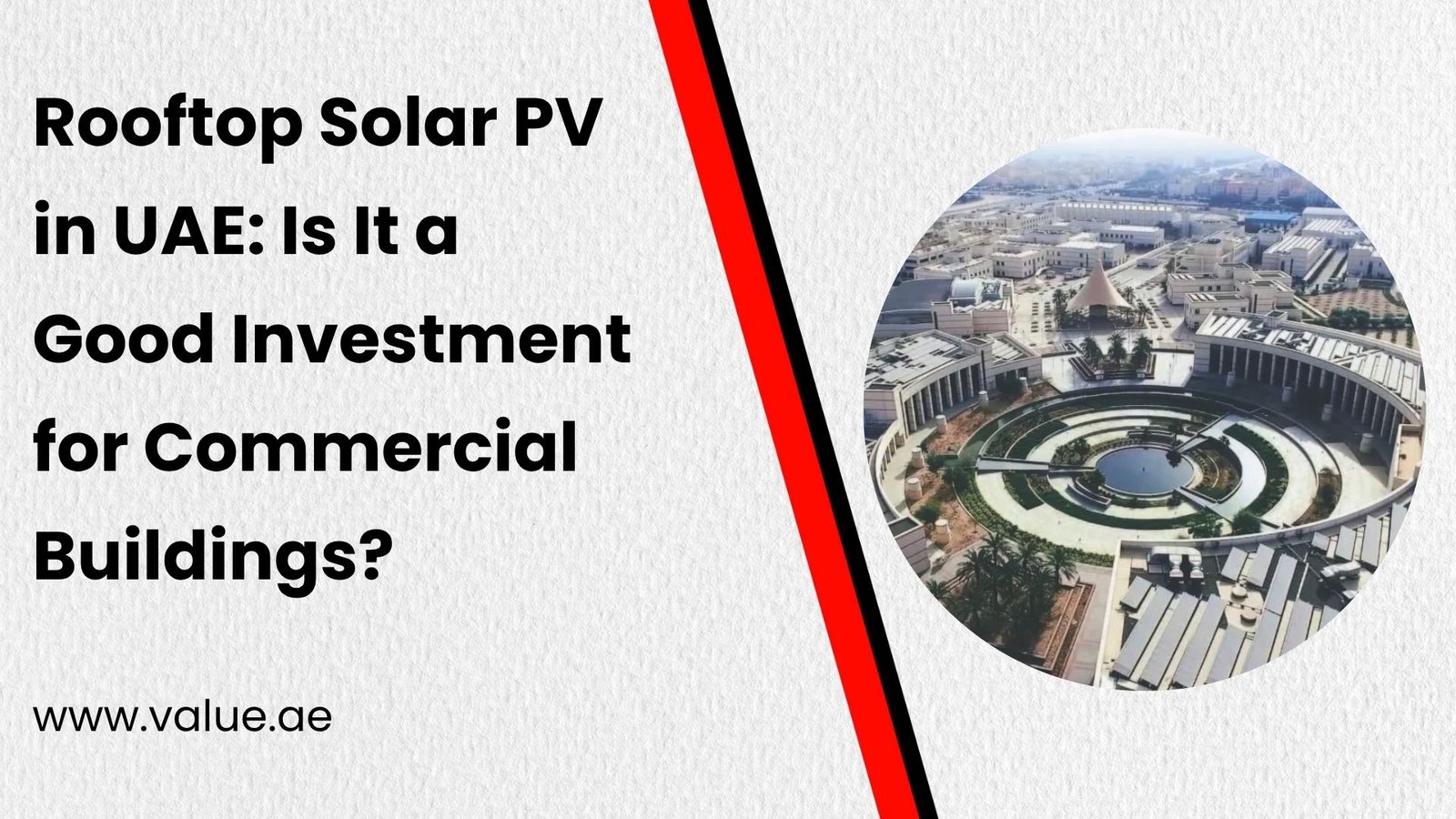
Rooftop Solar PV in UAE: Is It a Good Investment for Commercial Buildings?
Introduction
The UAE’s abundant sunlight, rising energy requirements, and growing focus on clean energy are encouraging businesses to explore rooftop solar power. For commercial and industrial buildings, installing photovoltaic panels can help reduce electricity costs, improve energy efficiency, and support long-term sustainability goals. Choosing the right solar PV supplier in UAE is therefore an important decision for businesses planning a reliable renewable-energy project.
A professionally designed rooftop solar installation can convert unused roof space into a productive energy asset. With suitable system sizing, quality components, proper installation, and ongoing maintenance, solar can become a practical investment for offices, warehouses, factories, hotels, retail facilities, and other commercial properties.
What Is a Rooftop Solar PV System?
A rooftop photovoltaic (PV) system uses solar panels to convert sunlight into electricity. The generated DC electricity passes through an inverter, which converts it into usable AC electricity for the building.
A typical solar system in UAE may include:
- Solar PV modules
- Grid-connected or hybrid inverters
- Mounting structures
- DC and AC protection equipment
- Monitoring and control systems
- Cables and electrical accessories
- Optional battery energy storage
The system can be designed according to the building’s electricity consumption, available roof area, operating schedule, and applicable grid requirements.
Key Features of Commercial Rooftop Solar
High Solar Generation Potential
The UAE receives substantial solar radiation throughout the year, providing favorable conditions for photovoltaic electricity generation.
Scalable System Design
Commercial PV systems can be designed for different building sizes and energy requirements. Additional capacity may also be considered when future electricity demand increases.
Smart Monitoring
Modern systems can include digital monitoring platforms that allow facility teams to track generation, system performance, energy consumption, and potential faults.
Durable Components
Commercial installations require panels, inverters, mounting systems, and electrical components designed to withstand high temperatures, dust, humidity, and outdoor conditions.
What Are the Benefits of Rooftop Solar for Businesses?
Reduced Electricity Expenses
One of the primary reasons businesses invest in rooftop PV is to reduce dependence on conventional grid electricity. Generating power on-site can lower electricity expenditure over the system’s operating life.
Better Energy Management
Solar generation during daylight hours can complement the operating schedules of offices, factories, warehouses, and commercial facilities. Businesses can monitor production and consumption to improve overall energy management.
Sustainability Benefits
Solar power can help organizations reduce their dependence on conventional energy sources and support environmental, ESG, and sustainability objectives.
Productive Use of Roof Space
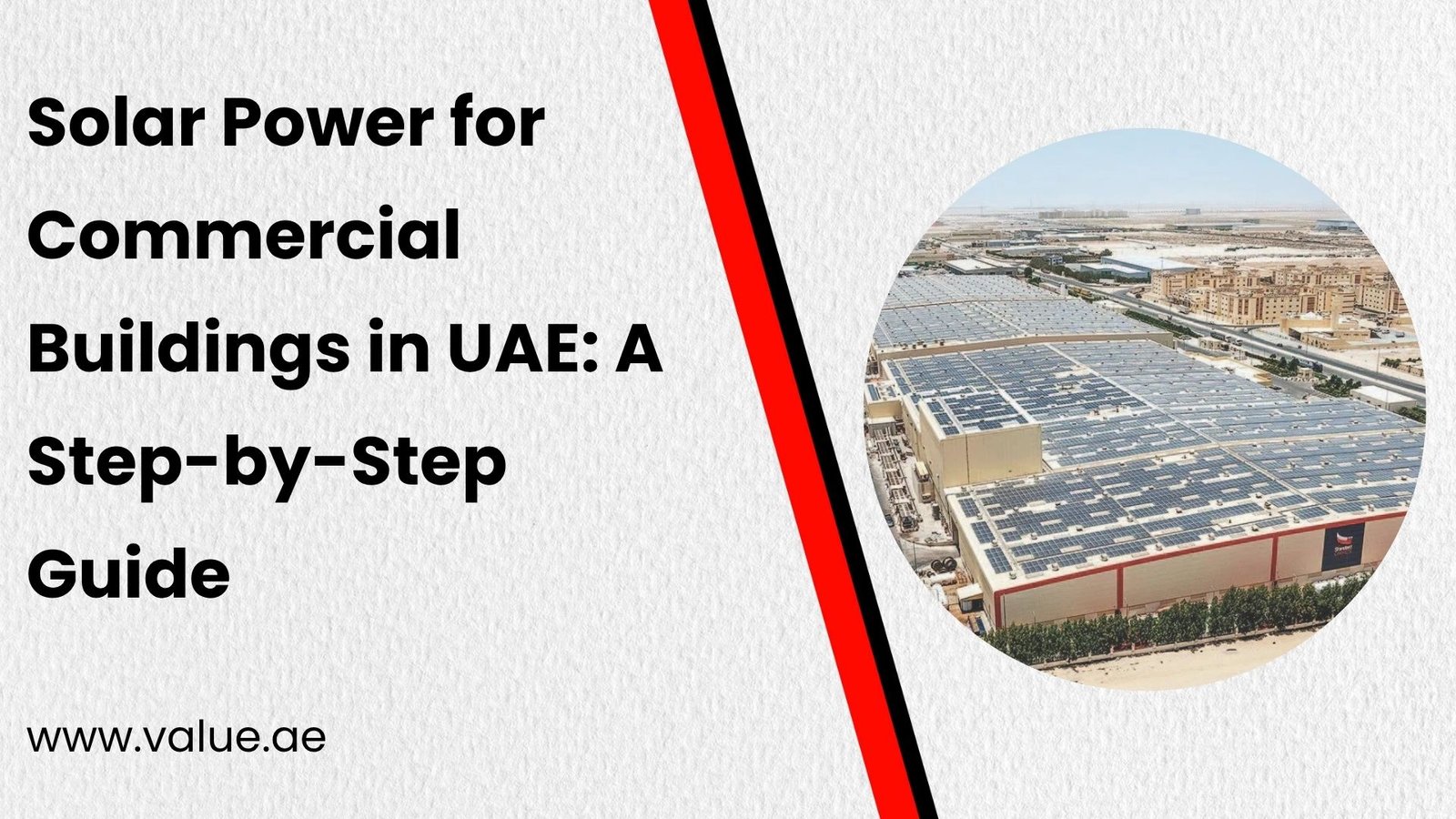
Large commercial rooftops often represent unused space. A well-engineered PV installation can transform this area into an electricity-generating asset without requiring additional land.
Long-Term Energy Planning
A rooftop solar project can provide businesses with greater visibility over a portion of their future energy costs, particularly when supported by accurate system design and performance monitoring.
Applications and Industries Served
A solar PV supplier in UAE can support projects across multiple commercial and industrial sectors.
Manufacturing and Industrial Facilities
Factories can use rooftop PV to offset daytime electricity consumption associated with machinery, HVAC systems, pumps, compressors, and production processes.
Warehouses and Logistics Centers
Large warehouse roofs can provide substantial installation areas. Solar generation can support lighting, cooling, material-handling equipment, and administrative operations.
Hotels and Commercial Buildings
Hotels, offices, shopping facilities, and business centers can use solar power to support lighting, air conditioning, water heating, and other electrical loads.
Educational and Institutional Facilities
Schools, campuses, and institutional buildings can integrate PV systems as part of energy-efficiency and sustainability initiatives.
Why Is Choosing the Right Solar PV Supplier Important?
The performance of a rooftop solar project depends on much more than purchasing panels. System design, roof assessment, electrical engineering, component selection, installation quality, commissioning, and after-sales support all influence the outcome.
A capable solar PV supplier in UAE should understand local environmental conditions and commercial energy requirements. The supplier should also evaluate roof orientation, shading, structural suitability, electricity consumption patterns, equipment specifications, safety requirements, monitoring capabilities, and maintenance needs before recommending a system.
Businesses should avoid selecting a solution based only on the lowest initial quotation. A technically appropriate system with dependable components and professional support can provide better value over its operating life.
Factors to Consider Before Choosing a Solar PV Supplier
Before appointing a supplier, procurement teams and facility managers should evaluate:
- Technical expertise: Review experience with commercial and industrial PV projects.
- System design capability: Ensure the supplier performs proper energy and site assessments.
- Component quality: Compare panel efficiency, inverter technology, warranties, and certifications.
- Installation standards: Check engineering, electrical safety, waterproofing, and mounting practices.
- Monitoring: Look for reliable performance-monitoring and reporting systems.
- Maintenance support: Confirm availability of inspection, cleaning, troubleshooting, and replacement services.
- Project economics: Evaluate expected energy generation, savings, payback period, and lifecycle value.
- Regulatory compliance: Ensure the project follows applicable UAE requirements and utility procedures.
Why Value Addition Is a Reliable Choice
For businesses seeking professional renewable-energy solutions, Value Addition brings an engineering-focused approach to solar projects. Its expertise can help commercial and industrial customers evaluate their energy requirements, select appropriate technologies, and develop practical solar solutions suited to their facilities. By emphasizing system performance, quality engineering, and long-term energy efficiency, Value Addition can be a valuable partner for organizations planning to adopt solar power in the UAE.
Latest Rooftop Solar Industry Trends in the UAE
The UAE’s solar market is increasingly moving toward smarter and more integrated energy solutions. Businesses are showing greater interest in high-efficiency PV modules, advanced inverter technology, remote monitoring, energy management systems, and battery storage.
Another important trend is the integration of solar with broader energy-efficiency strategies. Instead of treating PV as an independent installation, businesses are increasingly evaluating solar alongside efficient HVAC equipment, LED lighting, building management systems, and energy storage.
For industrial facilities, data-driven monitoring is also becoming increasingly important. Performance information can help engineering teams identify underperforming equipment, plan preventive maintenance, and optimize energy consumption.
FAQs About Solar PV in UAE
1. Is rooftop solar suitable for commercial buildings in the UAE?
Yes. Commercial rooftops can be suitable for solar PV because of the UAE’s strong solar resource. Suitability depends on roof area, structural conditions, shading, energy consumption, and project requirements.
2. How do I choose a solar PV supplier in UAE?
Compare suppliers based on technical expertise, project experience, component quality, system design, installation capabilities, monitoring, warranties, maintenance support, and compliance with applicable requirements.
3. What does a solar system in UAE typically include?
A typical system includes PV panels, inverters, mounting structures, electrical protection equipment, cables, monitoring technology, and other components required for safe grid-connected operation.
4. Can factories use rooftop solar?
Yes. Factories with suitable rooftops can use PV systems to offset electricity consumed by production equipment, HVAC, pumps, compressors, lighting, and other daytime loads.
5. Is solar a good long-term investment for businesses?
It can be, particularly where electricity consumption is significant during daylight hours, and the building has a suitable roof. Businesses should conduct a project-specific technical and financial assessment before investing.
Conclusion
Rooftop solar PV can be a strategic energy investment for UAE commercial and industrial properties. It can help businesses reduce electricity costs, improve energy management, utilize unused roof space, and advance sustainability objectives. However, project success depends on accurate system design, high-quality equipment, professional installation, and dependable maintenance.
Selecting an experienced solar PV supplier in UAE can help businesses move from a basic solar installation toward a properly engineered energy solution. With the right approach, rooftop PV can become an important part of a company’s long-term energy strategy.
Looking for a solar PV supplier in UAE?
If your commercial or industrial facility is considering rooftop solar, Value Addition can help evaluate your requirements and develop a suitable renewable-energy solution. Connect with Value Addition to explore a professionally designed solar PV supplier in UAE solution tailored to your building, energy demand, and sustainability objectives.
Read More: Rooftop Solar PV in UAE: Is It a Good Investment for Commercial Buildings?
Recent News